
Cases apparently take some time to resolve, the staff has worked diligently for a resolution in my case and I appreciate the hard work being done over this period of time.
Valerie Maddox
5 years ago

Avandia Side Effects. In September 2010, the Food Drug Administration (FDA) placed severe restrictions on Avandia, citing its heart risks. The FDA’s directive means that patients in the US will only have access to Avandia if they and their doctors attest that they have tried every other diabetes medicine and that patients have been […]
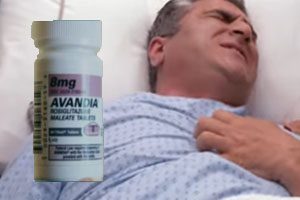
Avandia Side Effects. In September 2010, the Food Drug Administration (FDA) placed severe restrictions on Avandia, citing its heart risks. The FDA’s directive means that patients in the US will only have access to Avandia if they and their doctors attest that they have tried every other diabetes medicine and that patients have been made aware of Avandia cardiac side effects.
Avandia’s active ingredient, rosiglitazone, is also available in combination with other diabetes medications – metformin under the brand name Avandamet or glimepiride under the brand name Avandaryl. The newly-imposed restrictions will also apply to those drugs.
In addition, the FDA ordered Avandia’s manufacturer, GlaxoSmithKline, to convene an independent group of scientists to review key aspects of the company’s clinical trial known as RECORD, which studied the cardiovascular safety of ‘Avandia’ compared to standard diabetes drugs.
RECORD, which was released in 2009, did not find increased heart risks, as other ‘Avandia’ studies have. It was touted by Glaxo as evidence of the drug’s safety.
RECORD was widely criticized on many fronts. In the summer of 2010, the FDA posted an Avandia briefing document on its Web site that characterized RECORD as inadequately designed and conducted to provide any reassurance about the CV (cardiovascular safety) of rosiglitazone.
The memo further stated that the RECORD results confirm and extend the recognized concerns regarding heart failure and possibly suggest an increased risk for heart attacks. The FDA review of RECORD found at least a dozen instances in which patients taking ‘Avandia’ suffered serious heart problems that were not counted in the trial tally of adverse events, mistakes that further obscured ‘Avandia’ heart risks.
On the same day the FDA announced the US Avandia restrictions, the European Medicines Agency suspended sales of all rosiglitazone-containing drugs, including ‘Avandia’. The agency said it could not identify further restrictions to reduce the drug’s cardiovascular risks.
The suspension is to remain in place unless convincing data are provided that identify a group of patients that would benefit from the drugs.
If you are taking the drug Actos in place of Avandia, click here for important information about Actos.
Have you had a heart attack while taking Avandia? This diabetes drug has been the subject of considerable controversy since 2007, when a Cleveland Clinic study found Avandia increased the chance of having a heart attack by 43 percent. Now evidence has emerged that GlaxoSmithKline has worked to hide Avandia’s heart side effects since 1999, the same year it was approved in the U.S.
Our Avandia heart attack lawyers are aggressively investigating allegations that GlaxoSmithKline covered-up this drug’s heart risks. If you or a loved one had a heart attack while taking Avandia, it is vital you take action to protect your legal rights. We urge you to call one of our ‘Avandia’ heart attack lawyers today.
Victims of ‘Avandia’ heart attacks may be eligible to receive compensation for medical bills, lost wages, pain and suffering, and other damages. Our Avandia heart attack lawyers are offering free, no-obligation case evaluations to anyone injured by this drug.
Since November 2007, Avandia’s label has included a black box warning. The Food and Drug Administration (FDA) strongest safety alert detailing its association with myocardial ischemia. Since the addition of the black box, evidence linking ‘Avandia’ to an increased risk of heart attacks has continued to accumulate.
On July 13-14, 2010, the FDA will convene a panel of outside experts to discuss the drug’s safety issues. At the conclusion of the meeting, the advisory panel will be asked to make a recommendation as to whether or not ‘Avandia’ should be allowed to remain on the market.
In anticipation of that meeting, FDA staff posted a 756-page briefing document to the agency Web site that is critical of the drug. One of the documents included in the posting is a memo slamming the so-called RECORD trial, an Avandia study paid for by GlaxoSmithKline.
RECORD, which involved 4,500 patients, compared Avandia to patients receiving other diabetes drugs, metformin and sulfonylurea, for an average of 5.5 years. Released in 2009, RECORD did not show an increased heart attack risk that has been seen in some other ‘Avandia’ studies, and was used by Glaxo to tout its safety.
The FDA memo asserts that RECORD was inadequately designed and conducted to provide any reassurance about the CV (cardiovascular safety) of rosiglitazone. It goes on to state that the RECORD results confirm and extend the recognized concerns regarding heart failure and possibly suggest an increased risk for heart attacks.
The FDA reviewer who examined RECORD found at least a dozen instances in which patients taking Avandia suffered serious heart problems that were not counted in the trials tally of adverse events, obscuring the drug’s true risks.
The advisory panel will also consider a study conducted by Dr. David Graham of the FDA Center for Drug Evaluation and Research. It found that patients in the U .S. Medicare system who took the drug may have suffered as many as 48,000 heart attacks, strokes and other problems between 1999 and 2009.
Graham’s study involved 227,500 patients, making it the largest to date, and found that patients who took ‘Avandia’ were 27 percent more likely to suffer a stroke, 25 percent more likely to develop heart failure and 14 percent more likely to die compared with those who took another drug called Actos.
Other evidence slated to be submitted to the panel includes a follow-up to the 2007 Cleveland clinic analysis. The update looked at 56 clinical studies involving 35,500 patients, including RECORD, and found an increased heart attack risk of 28 percent. Without RECORD, the risk of heart attacks rose to 39 percent, according to the study.
On the eve of the FDA’s advisory panel meeting on Avandia, The New York Times published an article that included allegations that Glaxo had worked to cover up Avandia’s heart risks since 1999. Our ‘Avandia’ heart attack lawyers are aggressively investigating the charges made by this report.
According to The Times’ article, SmithKline Beecham – now Glaxo – began and completed a study in 1999 comparing Avandia to Actos, a competing diabetes drug. Not only did the study find Avandia held no benefit over Actos, it also found ‘Avandia’ could be more dangerous to the heart. According to The Times, SmithKline Beecham did not submit the study’s results to federal drug regulators, as is required in most cases by law.
This was done for the U.S. business, way under the radar, Dr. Martin I. Freed, a SmithKline executive, wrote in an e-mail message dated March 29, 2001, about the study results that was obtained by The Times. Per Sr. Mgmt request, these data should not see the light of day to anyone outside of GSK.
The New York Times also found that Glaxo conducted trials comparing Avandia with glyburide, a cheaper and older diabetes medicine. When asked by a company official via email about publishing two of those studies, Freed responded in a message dated July 20, 2001:Not a chance. These put ‘Avandia’ in quite a negative light when folks look at the response of the RSG mono-therapy arm.
The personal injury attorneys at Parker Waichman LLP offer free, no-obligation case evaluations. For more information, fill out our online contact form or call 1-800-YOURLAWYER (1-800-968-7529).